

Richard Feynman (1918-1988) was a Nobel Prize-winning American theoretical physicist, celebrated for his revolutionary work in quantum electrodynamics (QED) which earned him a share of the 1965 Nobel Prize. A key figure in the Manhattan Project and a famously captivating lecturer at Caltech. Beyond his profound scientific contributions, he became a beloved public icon through his best-selling autobiographical books and his pivotal role as the investigator who dramatically demonstrated the cause of the Space Shuttle Challenger disaster.
Feynman’s books are landmark works of popular science, but they occupy a unique, high-level niche; while accessible to curious readers and driven by his charismatic, anecdotal voice, they defy the genre’s typical reliance on metaphor—as used by communicators like Carl Sagan or Stephen Hawking—by offering demanding, conceptually direct explanations that strive for deep qualitative understanding rather than narrative storytelling. Works like QED read like masterclasses from a Nobel laureate, and though “Surely You’re Joking…” popularizes a scientist’s playful mindset, his famed Lectures on Physics remain a rigorous textbook, not popular science. In this post we present Richard P. Feynman’s Books in Order.
This page contains affiliate links. If you make a purchase using links on this page, we might earn a commission.
Richard P. Feynman’s 10 Best Books in Publication Order
Six Not So Easy Pieces: Einstein’s Relativity, Symmetry, and Space-Time, by Richard P. Feynman

First published in 1963
In Six Not So Easy Pieces Feynman breaks down the mind-bending concepts of Einstein’s relativity with the clarity and gusto that made him a legendary teacher. It is an accessible yet profound guide to how space, time, and energy actually work, proven to be one of the best explanations for the curious layperson.
The Feynman Lectures on Physics, by Richard P. Feynman

First published in 1964. Updated with the New Millennium Edition in 2011
The definitive New Millennium Edition of Feynman’s legendary Caltech lectures offers a complete, fully corrected introduction to the entire field of physics. From basic Newtonian mechanics to the complexities of quantum theory, these volumes capture the monumental clarity and insight of the subject’s most celebrated teacher.
The Character of Physical Law, by Richard P. Feynman
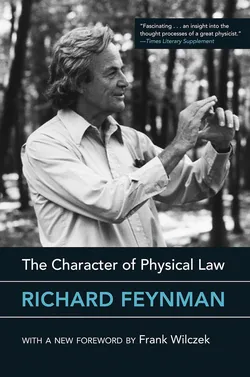
First published in 1964
Based on a famous series of Cornell lectures, this book showcases Richard Feynman at his most witty and philosophical as he explores the common threads that bind all physical laws. He moves beyond simple equations to discuss the “puzzle of symmetry,” the interaction between math and science, and the sheer cleverness of nature itself.
“Surely You’re Joking, Mr. Feynman!”: Adventures of a Curious Character, by Richard P. Feynman
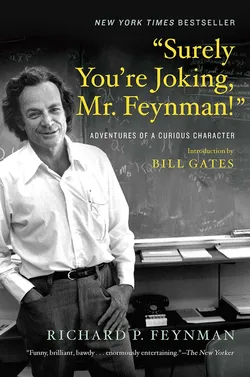
First published in 1985
This iconic bestseller is a series of hilarious and candid anecdotes revealing the eccentric life of Richard Feynman as a Nobel Prize-winning physicist, safecracker, and practical joker. It’s a vivid self-portrait of a man whose unquenchable curiosity led him from the Manhattan Project to bongo playing, proving that a great mind can also be a wild adventurer. If you’re new to physics and Feynman our recommendation would be to start with this book.
QED: The Strange Theory of Light and Matter, by Richard P. Feynman
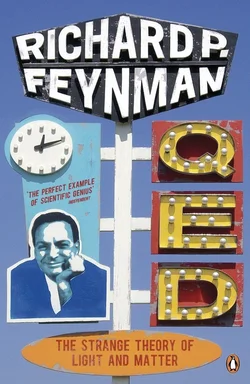
First published in 1985
Feynman uses “Feynman diagrams” and everyday language to explain quantum electrodynamics (QED) to the general public without the need for advanced math. It is widely considered the definitive guide to how light and matter interact, capturing the complex world of quantum physics with original clarity and humor.
“What Do You Care What Other People Think?”: Further Adventures of a Curious Character, by Richard P. Feynman
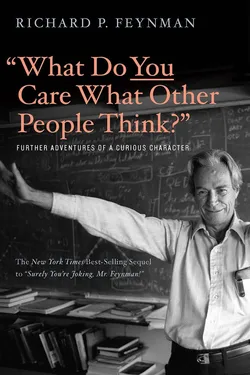
First published in 1988
This moving sequel to Surely You’re Joking, Mr. Feynman! blends humorous personal anecdotes with a deep look at the man behind the genius. It features a poignant account of his first love and his famous, elegant “ice water experiment” that revealed the truth behind the Space Shuttle Challenger disaster.

Six Easy Pieces: Essentials of Physics Explained by Its Most Brilliant Teacher, by Richard P. Feynman

First published in 1994
Six Easy Pieces distills the most accessible highlights from Feynman’s famous Caltech lectures into a beginner-friendly introduction to the fundamentals of science. Using minimal jargon and clever illustrations, he explains core concepts like atoms, energy, and gravitation with his signature “scintillating” wit.
The Meaning of It All: Thoughts of a Citizen-Scientist, by Richard P. Feynman

First published in 1998
Based on a series of public lectures, The Meaning of It All explores Feynman’s provocative thoughts on the intersection of science, religion, and social issues. From debunking flying saucers to reflecting on the death of his first wife, it reveals the “citizen-scientist” side of Feynman as he applies his analytical mind to the complexities of human life.
The Pleasure of Finding Things Out: The Best Short Works of Richard P. Feynman, by Richard P. Feynman
First published in 1999
This collection gathers Feynman’s most influential short works, including interviews, speeches, and his Nobel Prize acceptance address. It offers a magnificent treasury of his thoughts on science’s role in culture, providing an intimate look at the intellectual curiosity that drove his groundbreaking career.
Perfectly Reasonable Deviations (from the Beaten Track): The Letters of Richard P. Feynman, by Richard P. Feynman
First published in 2004
Edited by his daughter Michelle, this collection of personal letters spans Feynman’s entire career, from his days as a graduate student to his final years. It serves as a “de facto guide to life,” revealing his warmth and optimism through private correspondence with family, fans, scientific peers, and even crackpots seeking his advice.
Feynman’s books are a gold standard in popular science because they respect the reader’s intelligence and strive for true understanding over superficial storytelling. They are more challenging and rewarding than much of the genre. If you’re interested, I recommend starting with “Surely You’re Joking, Mr. Feynman!” for his hilarious personality, then move to QED to experience his unparalleled explanatory genius.